Creating an RCS Template (Text, Document, Image and Video)
Step 1: Access the Templates Section
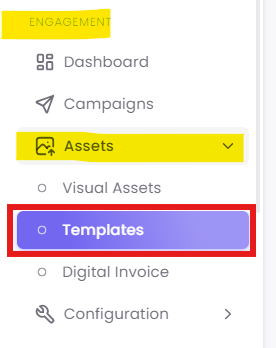
Step 2: Start Template Creation
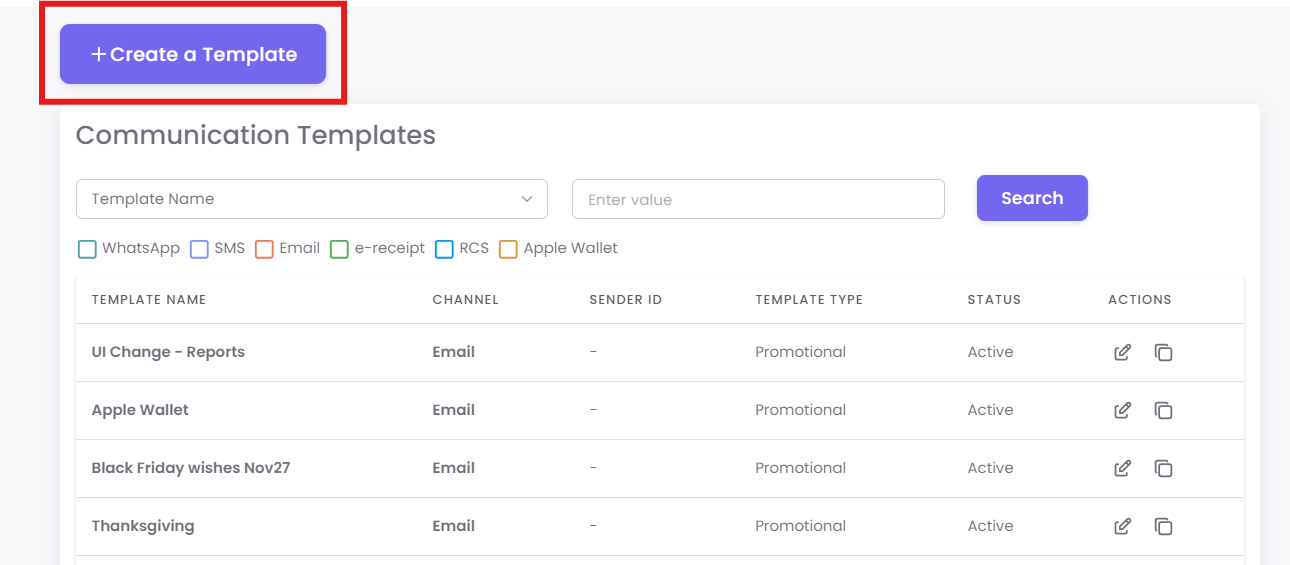
1. On the Communication Templates page, click the + Create a Template button.
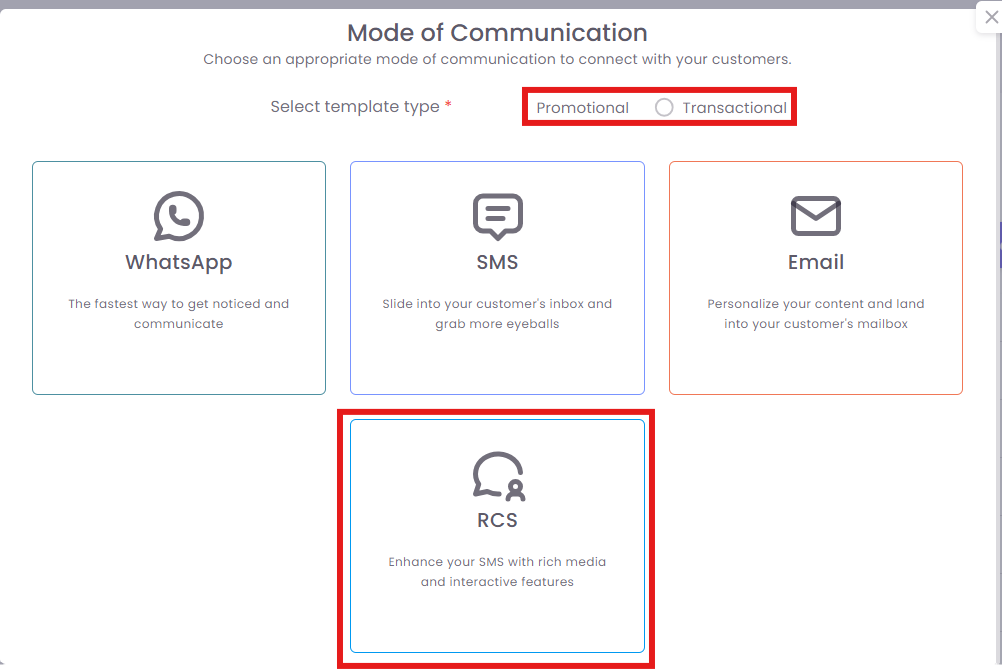
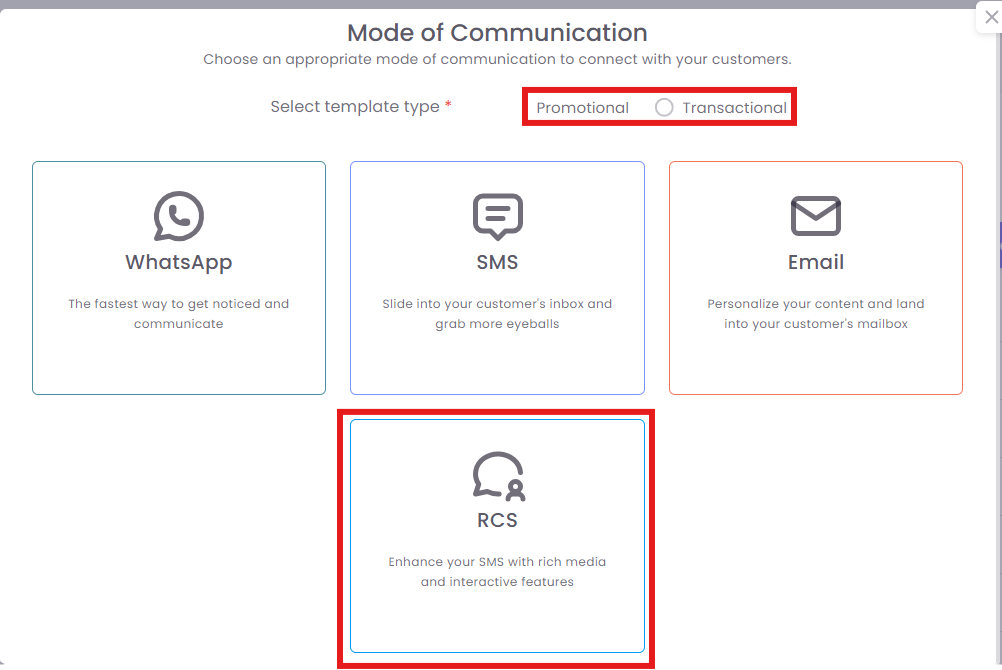
2. In the Mode of Communication step, select the following:
- Select template type: Choose Promotional
-
Select communication channel: Choose RCS
Step 3: Enter Template Details
RCS supports various message types, including Text, Document, Video, Image, and Carousel. Here is how to configure an Image-based template:
-
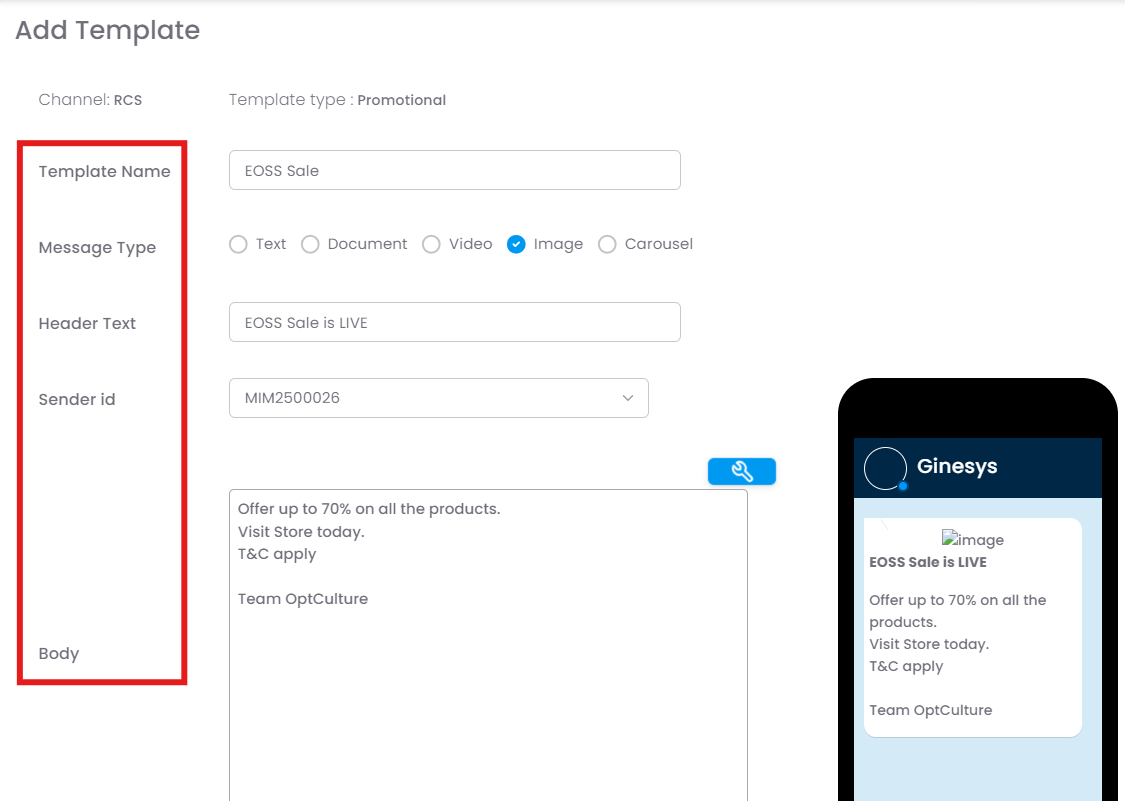
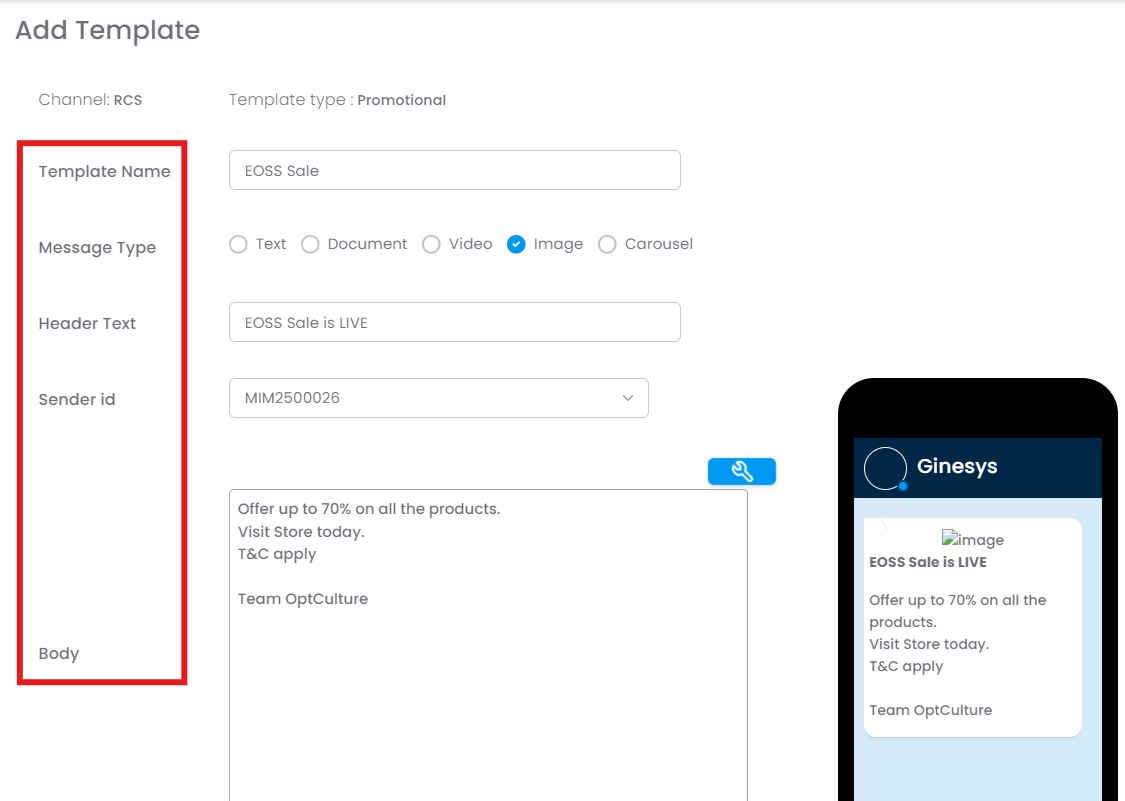
In the Add Template section, fill in the details:
-
Channel: Should be pre-filled as RCS.
-
Template type: Should be pre-filled as Promotional.
-
Template Name: Enter a unique, descriptive name.
-
Message Type: Select Image (highlighted in the screenshot).
-
Header Text: Enter the title or headline.
-
Sender id: Select your approved RCS Business Message (BMA) ID
-
Body: Type your main message content.
-
Step 4: Inserting Personalization (Merge Tags)
To personalize your message, use Merge Tags (Placeholders).
-
Place your cursor in the Body field where you want the personalized data to appear.
-
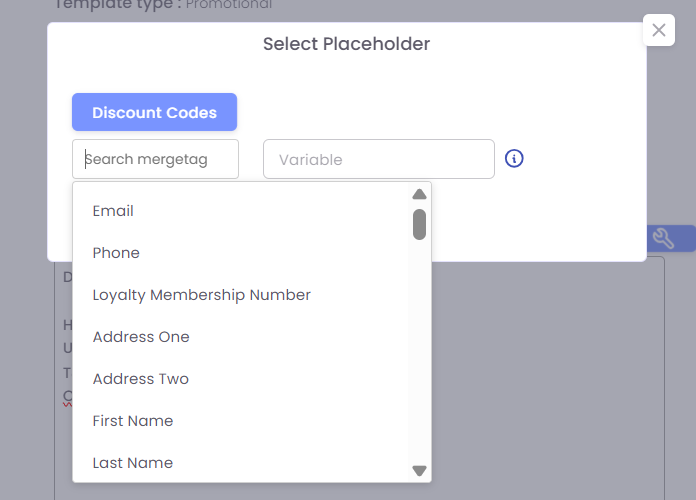
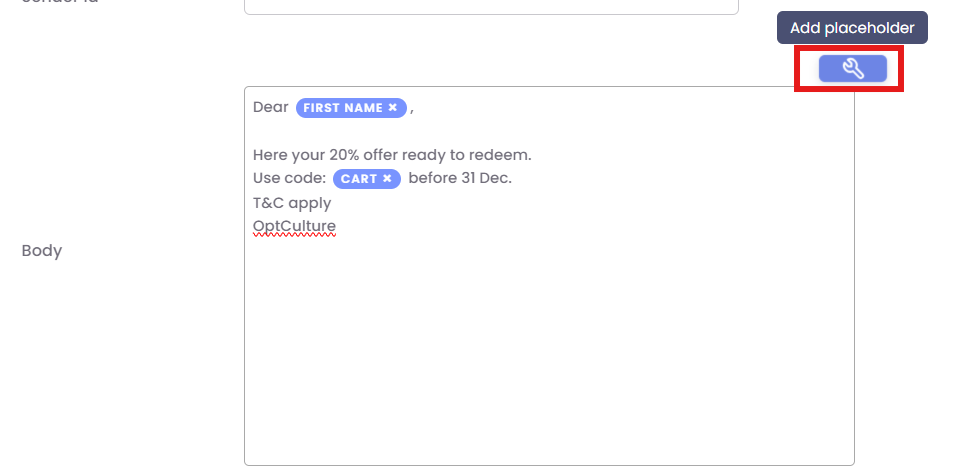
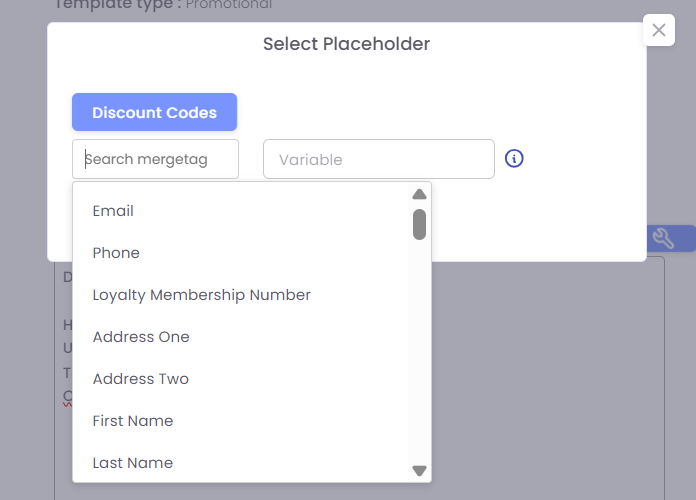
Click the blue search/placeholder icon next to the body field to open the Select Placeholder window.
-
You can use the Search merge tag field or scroll through the list to find the required field.
-
Select the desired field, such as First Name or Discount Codes (as shown in the screenshot).
-
The system will insert the correct merge tag into your message body (e.g.,
FIRST NAME).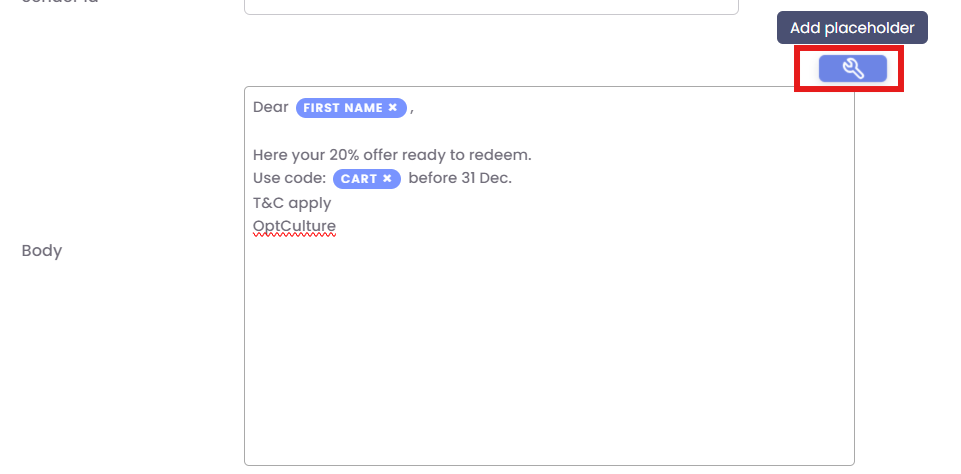
Step 5: For URLs Click Tracking
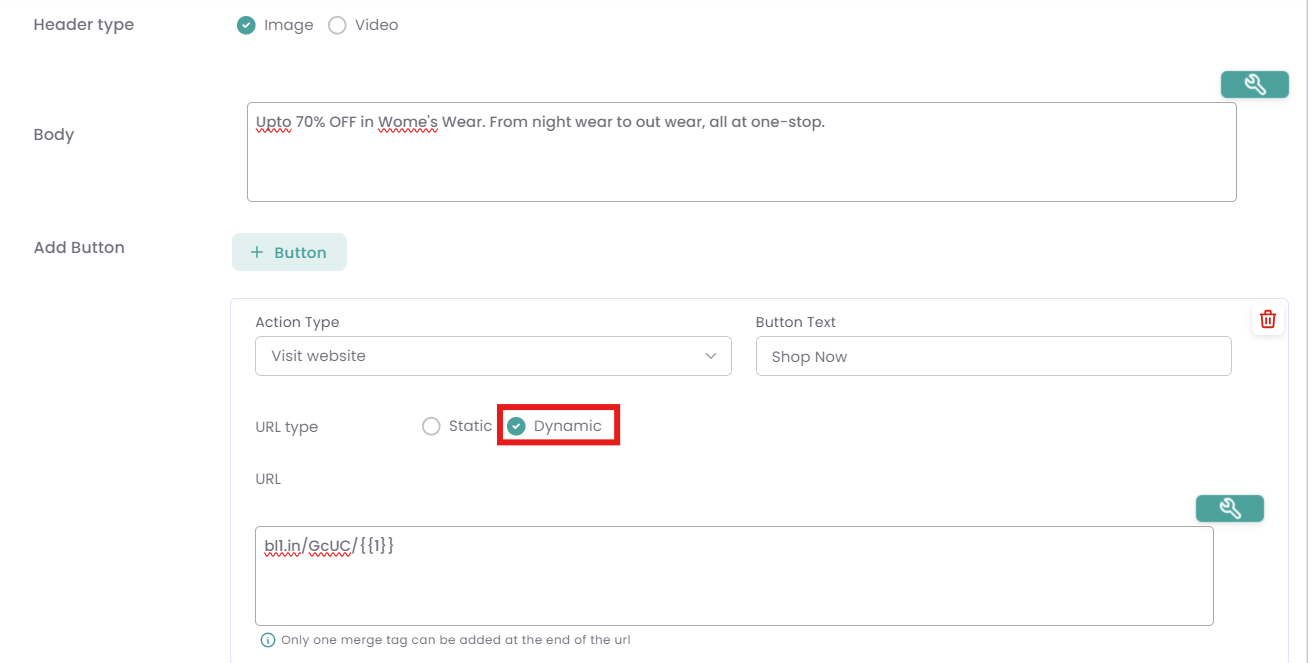
You can use Dynamic URLs to track which specific customers clicked a link within your campaign, improving campaign analytics.
-
When configuring a Visit website button, select the Dynamic URL type.
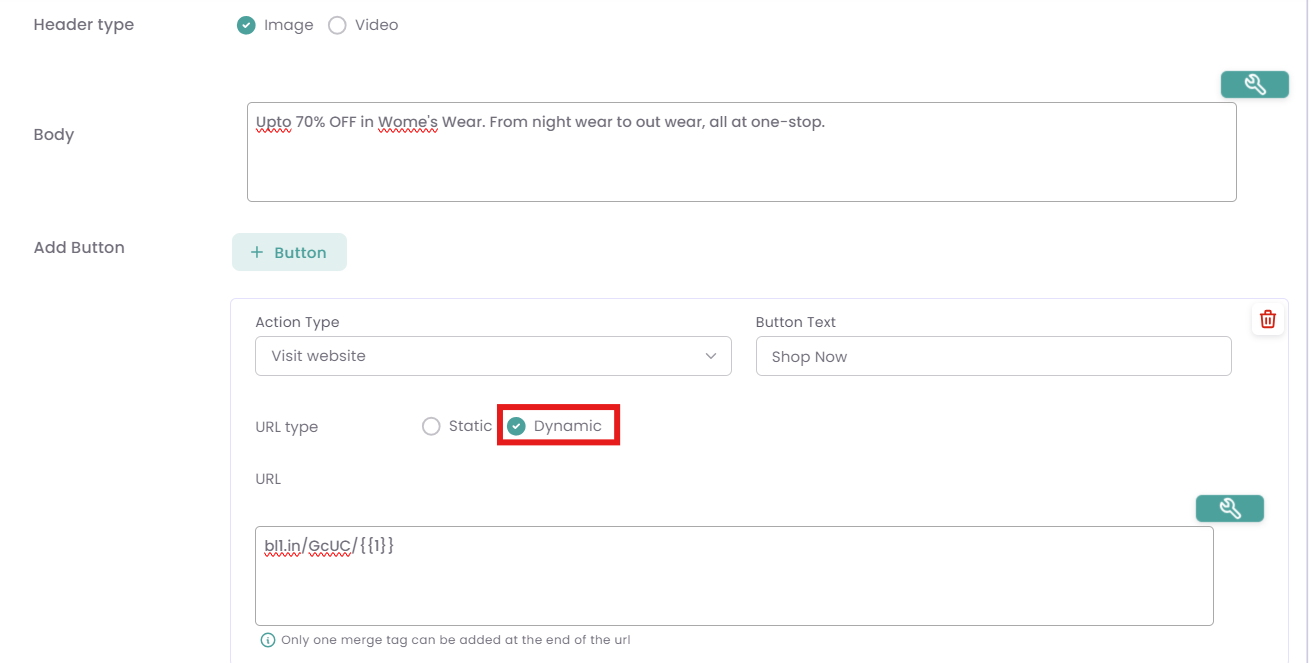
-
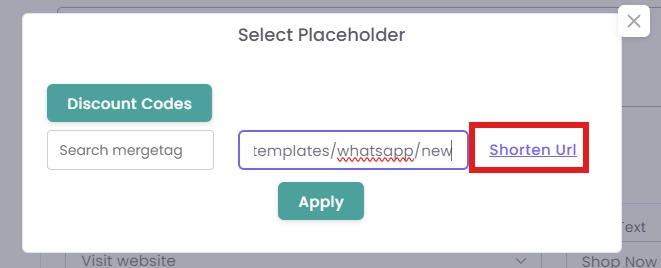
Click the search/placeholder icon next to the URL field.
-
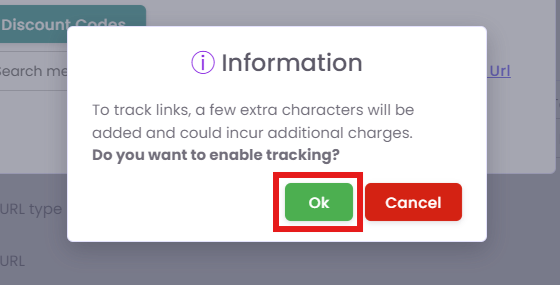
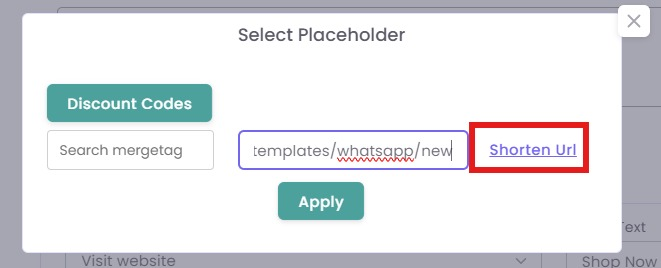
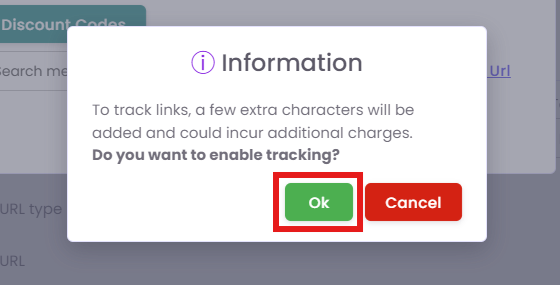
In the pop-up, paste your base URL and click OK to track.
-
Click Shorten Url if your platform's tracking requires it.
-
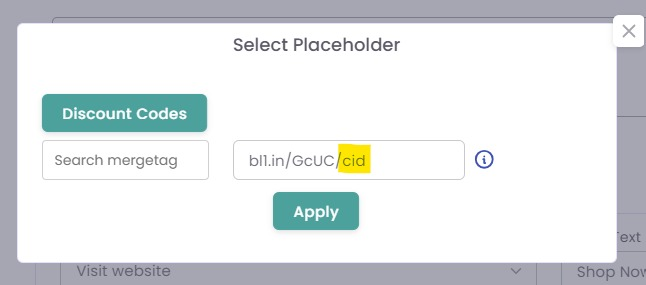
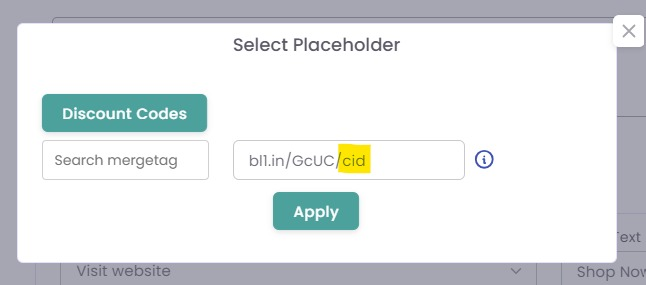
After shortening, you will see a unique placeholder (e.g.,
{{1}}for a merge tag) appended to the shortened URL (e.g.,bll.in/GcUc{{1}}). This placeholder is typically for a Customer ID (CID) or similar tracking variable. -
Click Apply. The resulting URL in the button configuration will contain the tracking placeholder.
Step 6: Save the Template
-
Review all the entered information, especially the message body and merge tags.
-
Click the Save button to finalize and store your RCS template.