
Creating a WhatsApp Campaign
Step 1: Navigate to Campaigns
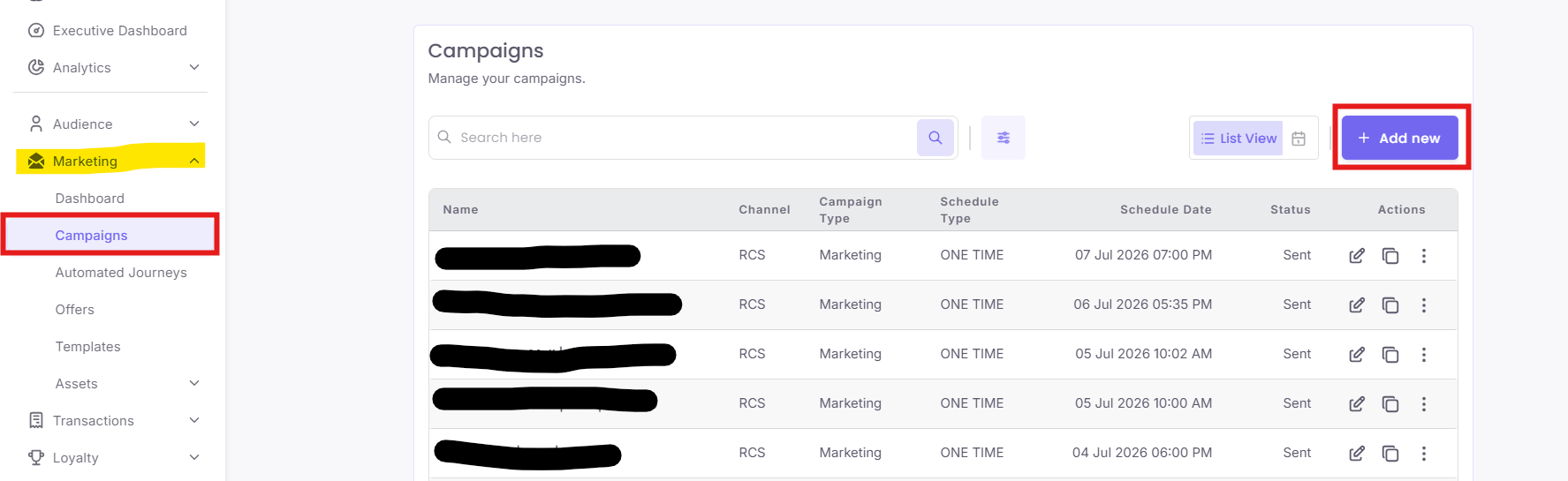
Navigate to Marketing > Campaigns in the left menu and click the + Add new button.
From the "Mode of Communication" options, select WhatsApp to begin.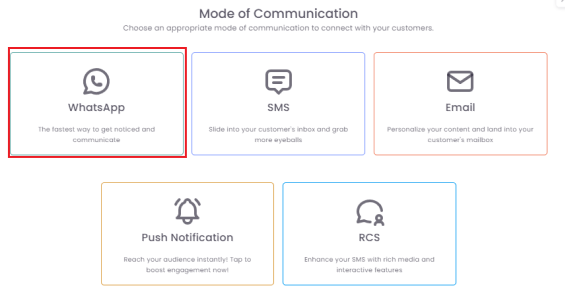
Step 2: Define Campaign Details
-
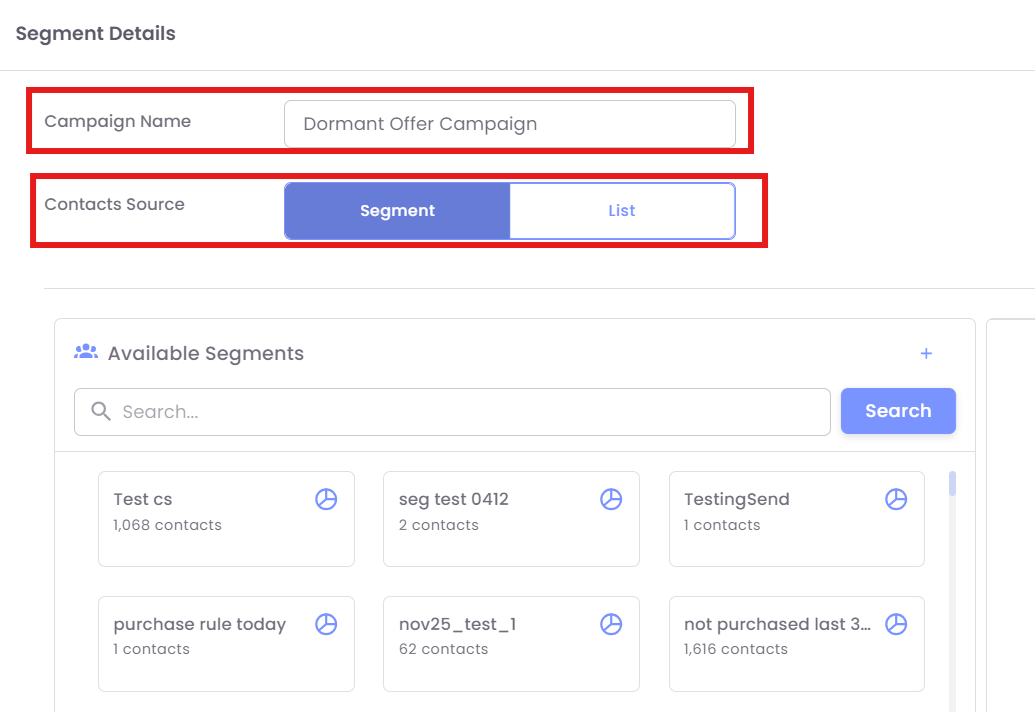
Campaign Name: Enter a clear, internal name for your campaign (e.g., "Dormant Offer Campaign - Q4 2025"). This is for your reference only.
-
Contacts Source: Select how you want to define your target audience. In this example, select Segment or List
Step 3: Select Target Audience (Segments)
You must select the customer segments you wish to target for this campaign.
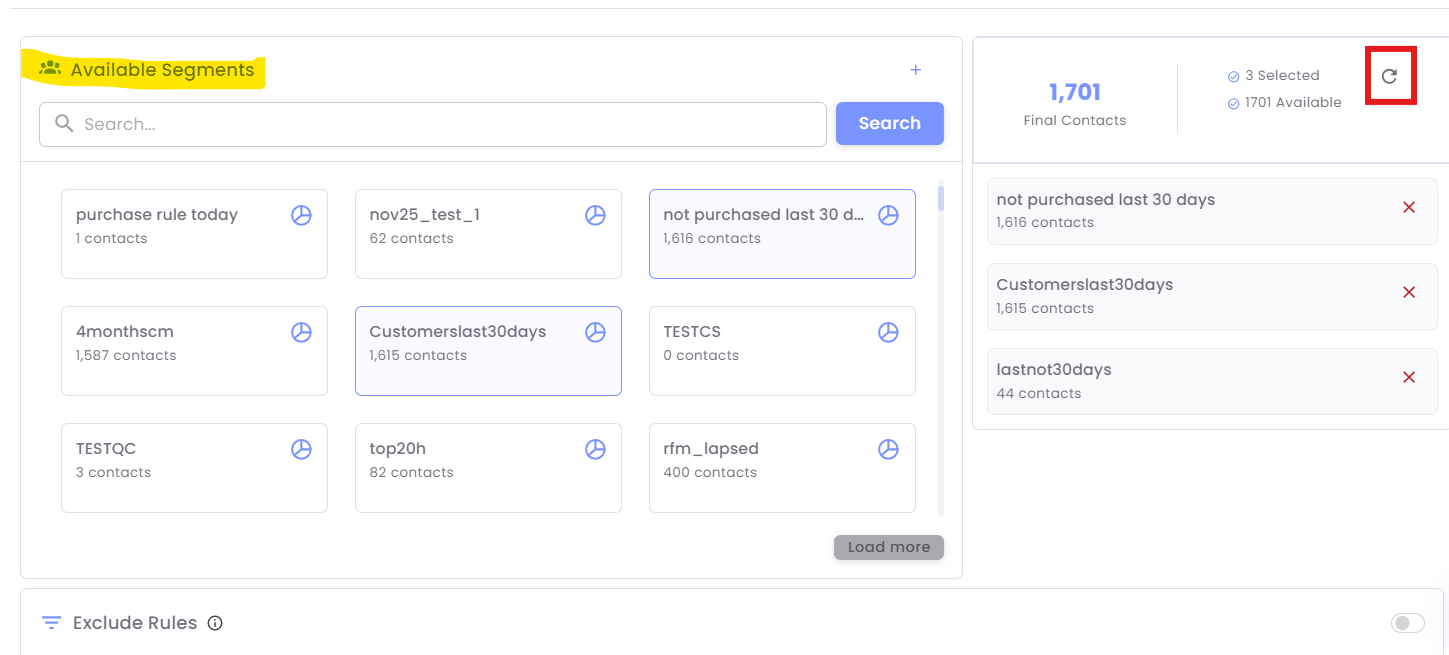
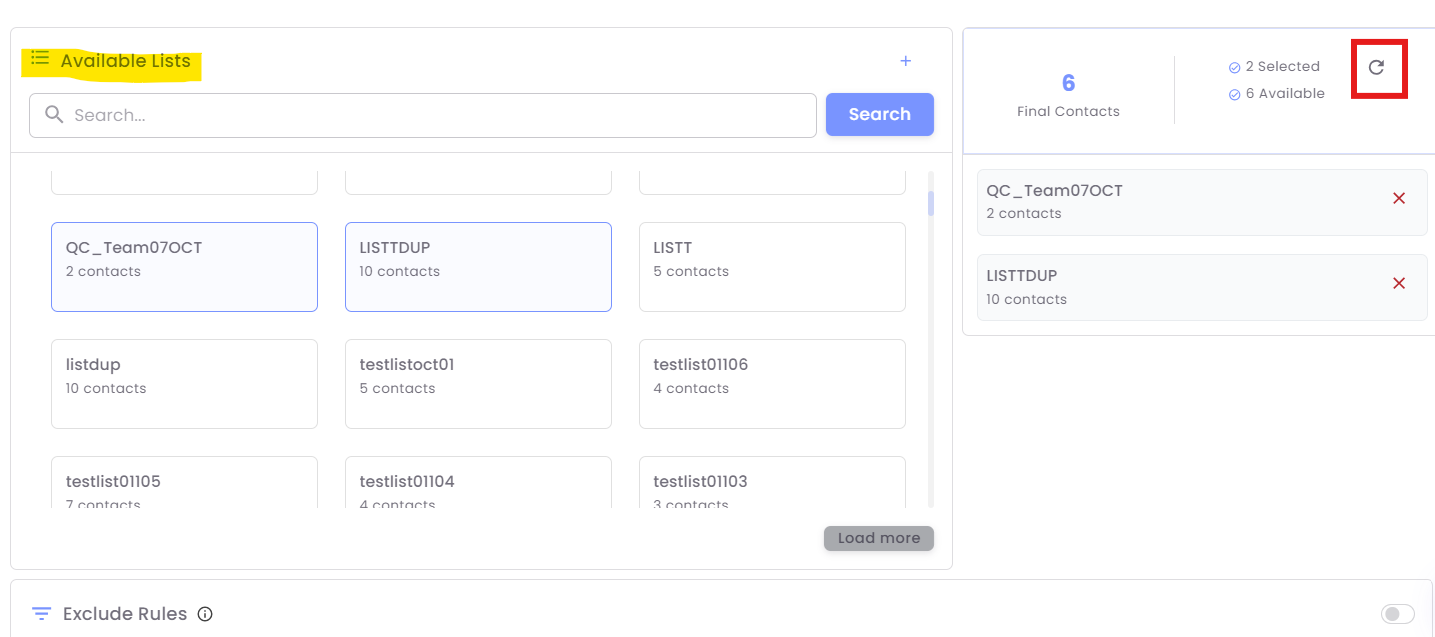
1. Under Available Segments or Lists, click on the segment/list you want to include. The selected segments\lists will move to the right-hand panel.
- Example: Selecting "not purchased last 30 days" (1616 contacts), "Customerslast30days" (1615 contacts) and "lastnot30days" (44 contacts) results in a total of 1701 Final Contacts (this number may be lower due to automatically removing duplicate contacts).
2. Click the Refresh icon (indicated by a circular arrow) next to the final contact count to ensure the most up-to-date count of contacts based on your selection.
Step 4: Configure Exclusion Rules (Optional)
Use exclusion rules to remove specific groups of contacts from your final audience, ensuring you don't send messages to ineligible or recently targeted customers.
-
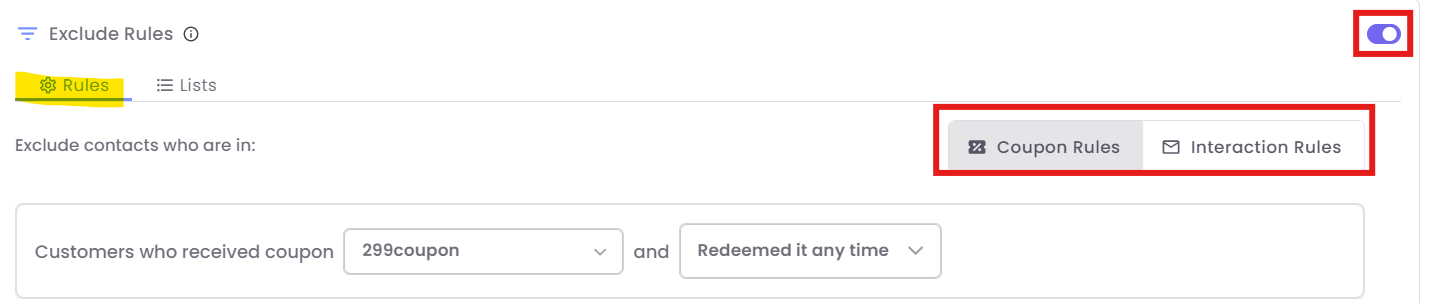
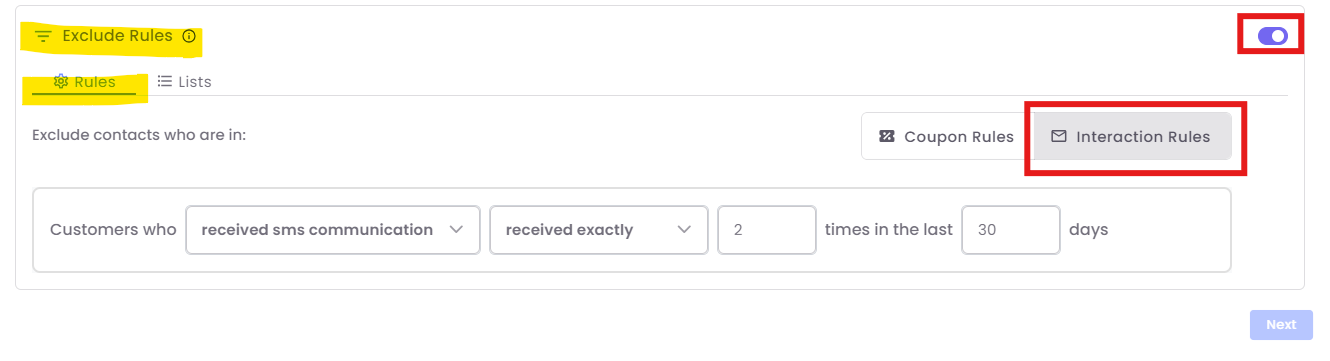
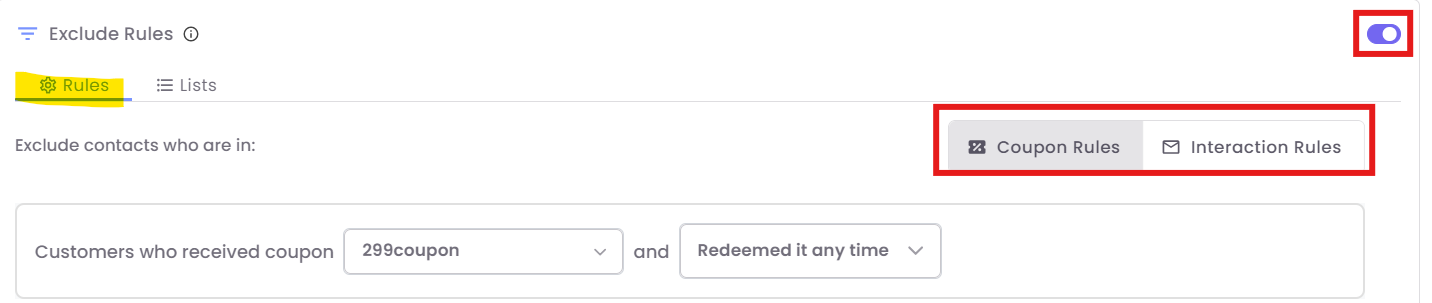
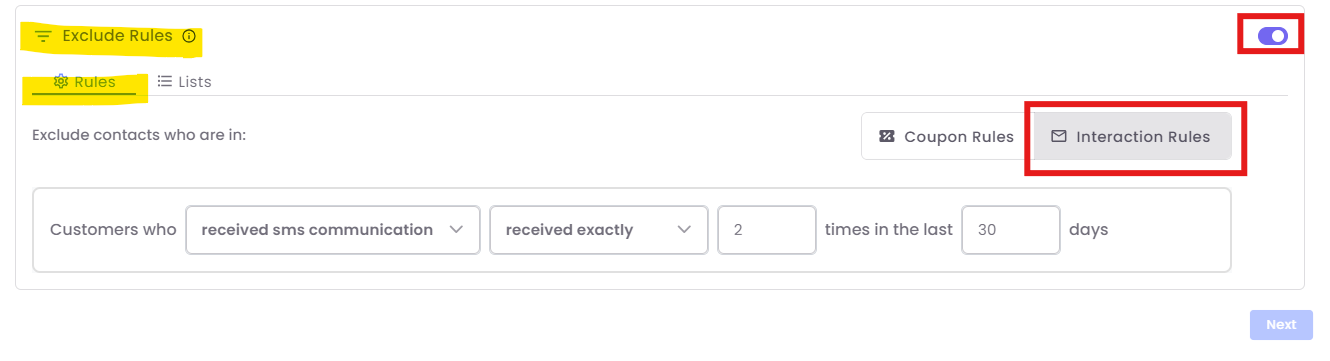
Ensure the Exclude Rules toggle is ON (highlighted in the images).
-
Exclusion by Rules (Coupon/Interaction): Click the Rules tab.
-
You can exclude contacts only in segments based on:
- Coupon Rules: Contacts who have received, redeemed, or have an active coupon.
-
- Example: You are sending a "Flash Sale" campaign, but you want to exclude anyone who has already "Redeemed it any time" for a previous 10% discount coupon.
- Use Case: Don't send a discount code to someone who just purchased from you yesterday!
-
- Interaction Rules: Contacts who have interacted (e.g., clicked a link) with a previous campaign.
-
-
Example: You can exclude customers who have "received exactly" 2 SMS communications in the last 30 days.
- Use Case: Avoid "spamming" your most active customers by skipping them in a general broadcast if they've already heard from your multiple times this month.
-
-
-
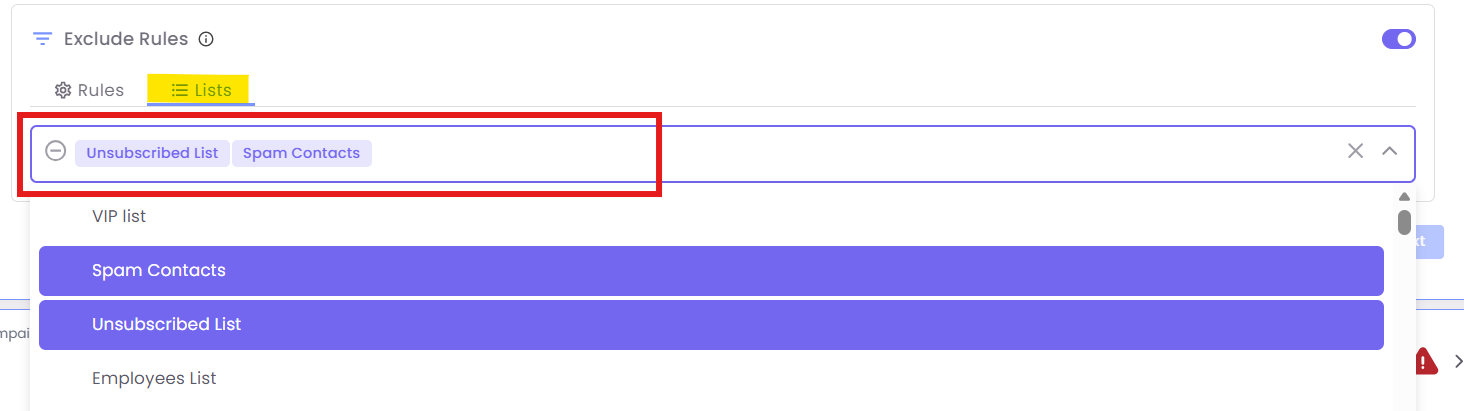
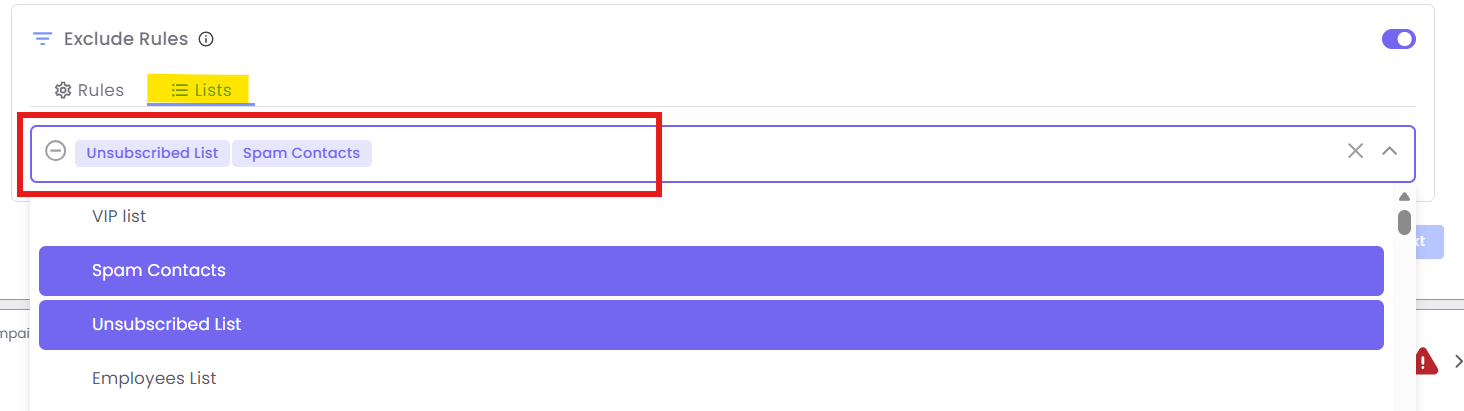
Exclusion by Lists: Click the Lists tab.
-
Select specific static lists of contacts you wish to exclude either from selected Segments or Lists.
-
-
Once exclusions are configured, click the Next button.
Step 5: Fill out Campaign Details
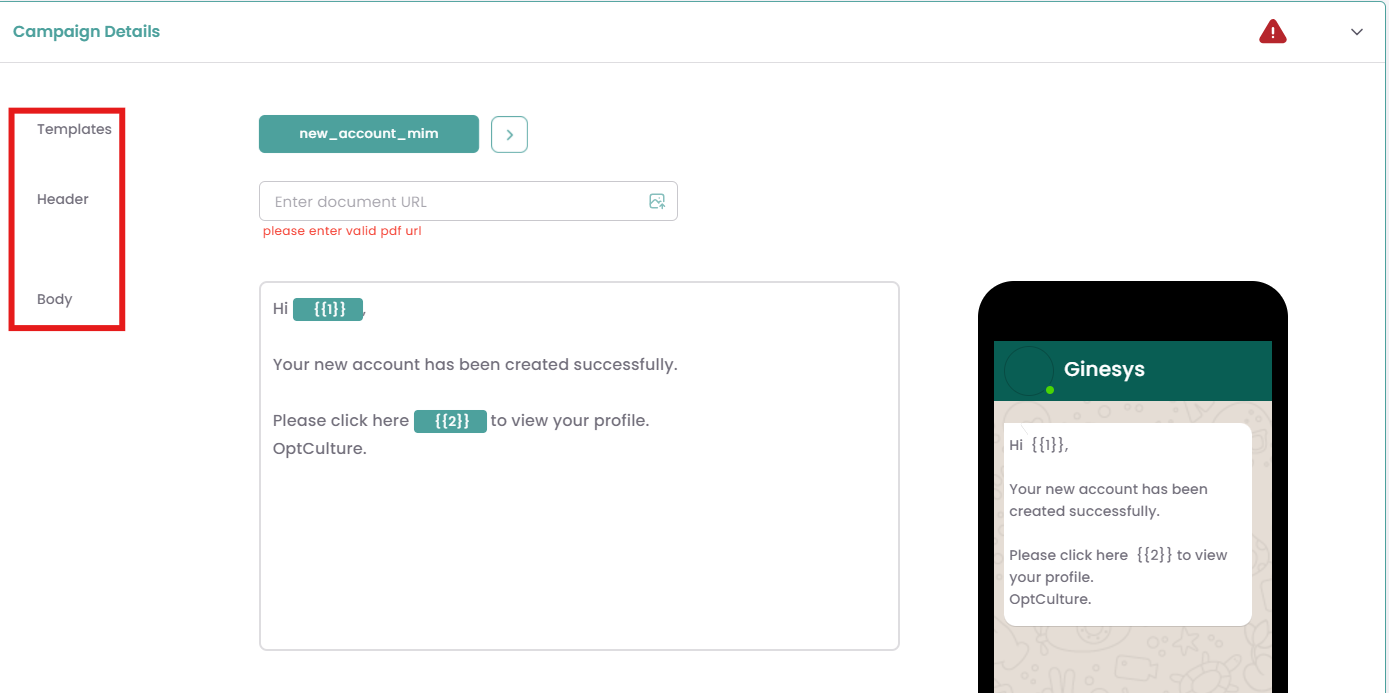
In the Campaign Details section, fill in the required information like Template selection and Header.
Step 6: Personalize Your Message
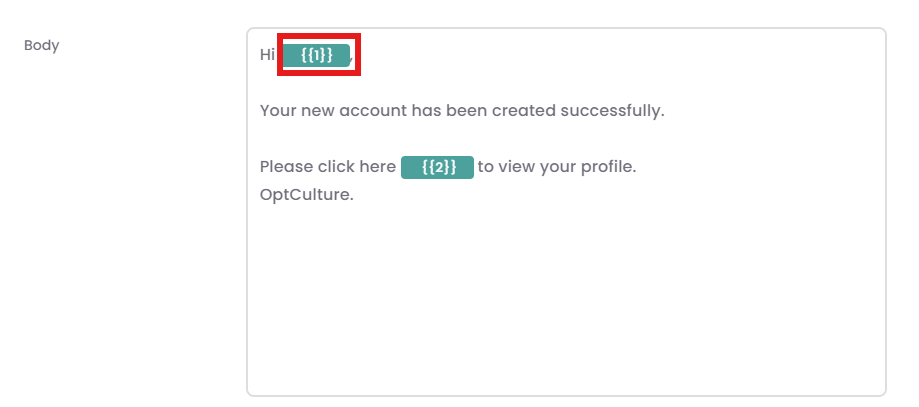
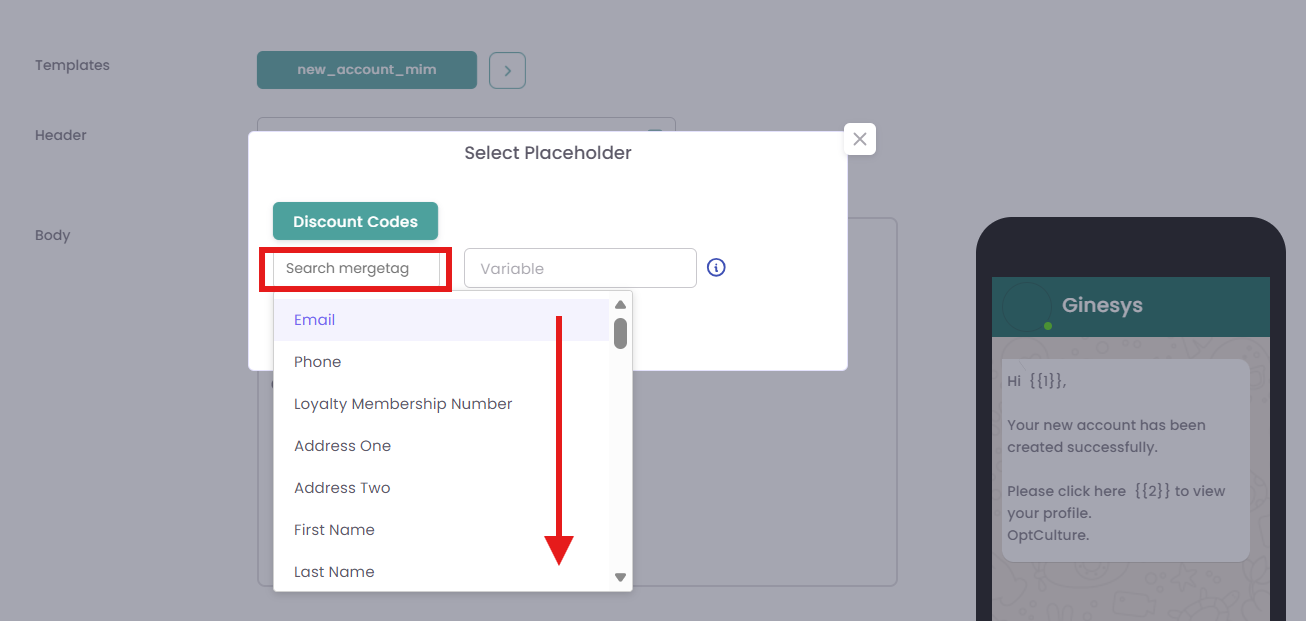
If your template body includes merge tags, simply click on them. A "Select Placeholder" pop-up will appear, allowing you to add the correct personalization details or discount coupon.
Step 7: Test and Save Section
Use the Send Test feature to send a test message to yourself. This is crucial for verifying content, personalization, and links. Once satisfied, click Next to save the section.

Step 8: Schedule Your Campaign
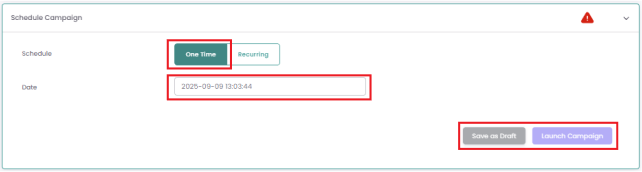
In the Schedule Campaign section, choose your schedule type:
-
One Time: Sends the campaign to all contacts at a fixed date and time. This is the default option.
-
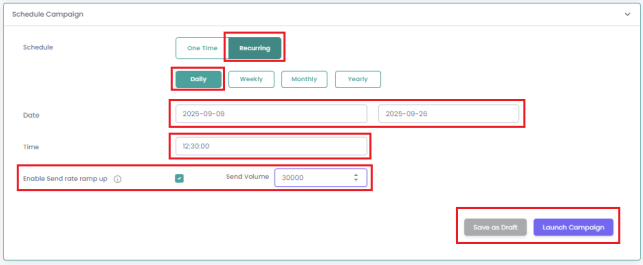
Recurring: Sends the campaign on a daily, weekly, monthly, or yearly basis
-
Rate Ramp Up: This feature allows you to set a maximum number of unique customers to be targeted each time the campaign is sent. The system will automatically exclude contacts reached in previous sends, ensuring each contact is reached only once as the campaign recurs.
-
Step 9: Launch or Save
-
Once you've chosen your schedule, you can either click Save as Draft or Launch Campaign.
-
Clicking Launch Campaign saves the campaign and sends it at the scheduled time.